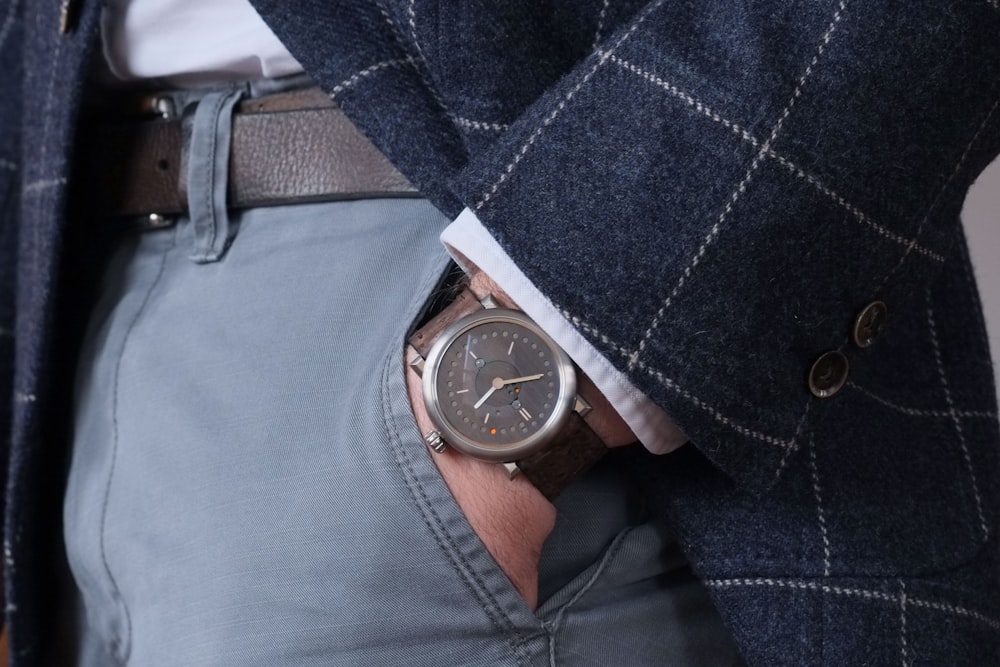
If you have a taste for irony, though, and for this sort of aesthetic maneuvering, these watches can be extremely appealing, especially in their rejection of the sometimes stiflingly stuffy atmosphere that fine watchmaking in particular, and luxury in general, can evoke. This is not without its own irony, of course. There is another French expression that’s apropos: épater la bourgeoisie, which means, more or less, to shock the middle class. As it turns out, sticking it to the man, horologically, can be a somewhat expensive proposition – Ochs Und Junior watches are certainly not priced to the aggressive if-you-have-to-ask-you-can’t-afford-it (you peasant) costs that characterizes so much of luxury watchmaking, but they ain’t exactly cheap either – one is reminded of the successive iterations of -isms that characterized a lot of 20th century modern art, each one of which originally was a rejection of a previous established order, and each one of which was rapidly assimilated to the profit-seeking rapacity at which the art market has long excelled. At its worst, going back to basics and celebrating simplicity ends up with irritating nonsense like Marie Antoinette and her ladies-in-waiting playing at being milkmaids at the Petit Trianon; genuine iconoclasm is appropriated by poseurs with alarming rapidity.
Grand Seiko seems to be the community’s darling. Since a few years, collectors and watch journalists are all over it and it seems to be increasing by the day. With ‘in-house’ GS ambassadors such as Joe Kirk, who happens to be Director of the Seiko Boutique Miami Design district and puts out beautiful images on his Instagram and Facebook account, we get to see how the community responds to the amazingly well-finished Grand Seiko watches.
The enthusiasm for Grand Seiko is so huge, that some people do wonder what’s going on. Is it all paid-for content that is being published? Is Seiko giving away free stuff to press who talks positively about them? Grand Seiko is all over the place on social media, everyone is raving about them, but you rarely see them in the flesh.
Back when I started Fratello, in 2004, I wasn’t overly enthusiastic or positive about Grand Seiko. I actually wondered why anyone in his (or her) right mind would spend so much money on a watch that’s basically ‘a Seiko’. And I didn’t hide that opinion. But everyone makes mistakes, including me. Fast forward 10 years later and the realization came that Grand Seiko is actually something special. Add another year, and I find myself in the Grand Seiko manufacture in Japan, looking at the master watchmakers who perform painstakingly work on the little masterpieces. The finish on the case is impeccable, using a special polishing technique by the name of ‘Zaratsu’. 15 minutes later, I am staring at a guy who polishes and checks hour markers. One by one, using a little mirror to see if everything is as smooth as it needs to be. All parts are hand-picked, the cases are polished by hand, the movements have special materials to make them as accurate as possible and are constructed in such way that the watchmaker can easily work on them. It is a pity that Japan is so far away for most of the watch enthusiasts, as I convinced that seeing is believing. But in the end, the proof of the pudding is in the eating. I bought my first Grand Seiko about two weeks ago and it took me almost a year to decide which reference. They have so many interesting references, and I promised myself that it should not be an impulsive purchase. I tried different models, in Japan and more close to home, I debated about dials, materials and movements. And finally, I made my choice. I couldn’t be happier and every time I put it on my wrist, it amazes me.
Grand Seiko SBGA373G
The watch I have here today though is not mine. I will do a review about my own Grand Seiko later on, after a few months of wearing. However, it does have similarities, such as the bracelet and the case shape. This shape is also known as the ’44GS’ design. It is that typical Grand Seiko design that is also referred to as the ‘The Grammar of Design’, based on their design from 1967. I talked about it here. For me, it was important that my own watch would have this typical Grand Seiko style or better said: a 44GS case.
Grand Seiko’s SBGA373G reference has this 44GS case, and it is a first that this case style has a Spring Drive movement inside. This watch was introduced in BaselWorld this year and comes in this beautiful champagne colour and there’s the reference with a dark blue dial. Although I love blue, the champagne dial is perhaps a bit more timeless. As always with the Grand Seiko Spring Drive movements, also called calibre 9R movements, there’s this little extra hand on the dial, indicating the power reserve. This is also one of the minor issues I have with this watch, or in fact, all of these Spring Drive powered movements. It is a bit too much for me. Like on the famous Snow Flake dial model of this watch, the little power reserve indicator dilute a bit from the otherwise perfect dial. But, I can also imagine that there are some people out there who love this kind of function, or complication. Also, this is just a minor issue, I think that I can live with it for sure, given the rest of the watch’s features and characteristics.
The great thing about Grand Seiko is, as often echoed, the finishing. I mean, aside from all the technical things that concern the Spring Drive movement, the design of the watch is something you are confronted with multiple times per day. So it has to look good, no matter what type of movement is inside. Right? The Zaratsu polishing, the sharp and shiny hour markers as well as the hands, they all have their way with light. The movie below, shot by our own Berti Buijsrogge, will give you a pretty good understanding of how Grand Seiko’s (44GS) case plays with the light. Now, you might find yourself focused on the dial or the super smooth motion of the Spring Drive’s second hand, but try to pay close attention to the shape of the case, with the beautiful Zaratsu polished long and sharp lugs. It is so incredibly difficult to get the design of this watch, without holding it in the flesh. Even with the naked eye, you can’t fully appreciate this watch unless you hold it in your hands and can rotate it a bit so you can see all angles.
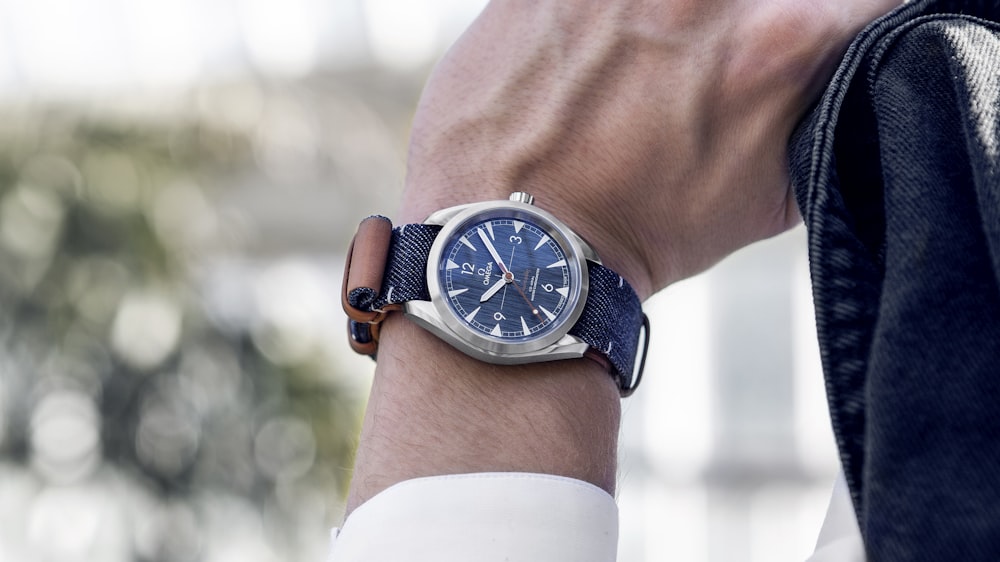
The newest version of the Omega Seamaster Railmaster features a vertically brushed dial that has been made to resemble denim, with an options strap actually made from the material to complete the look. While denim seems like a perfectly natural style choice, incorporating one of the most versatile fabrics ever, Omega says this material is actually a specific nod to the historical origins of the Railmaster itself. On the railroads, farms, and factory floors – places in which the hard-working, anti-magnetic watch was intended to be worn – working people routinely encountered machinery that might magnetize certain other watches. And in many cases, these workers would have been wearing denim.
Today on #TBT we’ll take a look at a Rolex that has “flown” below the radar for some time. It’s a watch with sporting intensions, but it’s not considered as a sports watch per se. Despite this, the Rolex 1625 Turn-o-Graph was actually issued to pilots in one of its earlier guises and features a “toolish” rotating bezel. Oh, and if you haven’t figured it out yet, this Rolex just happens to come in gold.
Let’s get into a little bit of history (for more, head here to this more extensive article). The original Turn-o-Graph was introduced in 1953 and the 6202 that appeared looked an awful lot like the Submariner that was still to come. It featured a black inlay rotating bezel and was offered with either a black or white honeycomb dial. With its introduction, it was actually the brand’s first production model with a rotating bezel. These models are scarce and rather expensive as they were only made for roughly a year until being replaced by the 6309 reference. Notably, the 6309 introduced a gold metal bezel, a trait that stayed with the model until it ceased production in 2011. At this time, it also became an official sub-model within the Datejust line. Also, during the 6309’s production, the watch became the official watch of the US Air Force Thunderbirds demonstration team and took with it the “Thunderbird” nickname that was often used in American Rolex advertising. In roughly 1959, though, the Rolex 1625 Turn-o-Graph was introduced and it was produced until 1977.
At first glance, it’s hard not to think of a Datejust when looking at the Rolex 1625 Turn-o-Graph. After all, the dressy dial, thin stick hands, applied rectangular markers and Cyclops over the date window are pure giveaways. Of course, the word “Datejust” on the dial seals the deal as well. It’s a funny thing because I’d wager that most think of a Datejust and the fluted bezel comes to mind. So, perhaps it’s this adder of the rotating bezel that comes off as a little incongruous to some because they’re so used to seeing something else in its place when paired with such a dial. That being said, the bezel is worth a closer look.
While this watch did become famous due to its association with a seriously skilled set of pilots, the Rolex 1625 Turn-o-Graph was apparently created for everyday professionals who may have wished to time something. That “something” could have been anything and not necessarily an activity involving life or death. Some may find that a bit boring, but when watch people sit down and honestly discuss how, or if, they use any watch functionality, a 60-minute bezel usually ranks amongst the top-most in terms of practicality.
When viewed up close, it’s actually a gorgeous piece of finishing that’s often tainted by wear or, somewhat offputtingly, by dirt and grime. The whole thing is cast as one piece in 18-karat gold and, therefore, the numbers are in relief at the tens along with the stick markers at the 5’s. In between, there’s fine ridging that almost makes the whole thing so bright that it’s truly difficult for the eye to take in at once. Yes, there’s that much lighting contrast. Plus, all of these topographic features become collectors of daily detritus and make themselves accessible to dents and dings. This example, as you can see, is really in lovely shape.
The bezel of the Rolex 1625 Turn-o-Graph is bi-directional and relies on a tight friction fit to keep it from turning without the use of force. With decent knurling around its edges, the bezel is ok to use, but the gold feels less edgy and tactile when compared to something like steel on a Submariner. Still, it does the job with little fuss.
The partners in crime for measuring some event are the tritium filled hands. These are done in gold and with their thin slice of lume, match the dots of tritium found on the outside of each applied gold hour marker. This rayed silver dial is capped off with a lovely applied coronet at 12:00.
Case-wise, the Rolex 1625 Turn-o-Graph, once again, won’t be a stranger to anyone familiar with a Datejust. It comes in at a familiar 36mm in diameter, but the size is aided with decently lengthy lugs. This piece likely received a highly professional polishing at some point, but you can see the lovely matte finishing on the tops of the lugs and the beautiful polishing on its sides. And like many older yellow gold Rolex watches, this “ToG” has turned a brassy shade of yellow. You can also see that the lugs are still thick and even: this is sadly not a guarantee with gold. Take special note of that lovely hallmark of gold Rolex cases, the small area of reinforcement along the inside of the lugs where they meet the case. The crown of the 1625 is a screw-down along with the case back. The thick acrylic crystal is also a cool throwback that reminds us that we’re dealing with something a bit older.
This Rolex 1625 Turn-o-Graph dates to roughly 1974 and contains a caliber 1570 automatic movement. From the dial, you can read that it’s chronometer certified. Unfortunately, it doesn’t contain a quick setting date, but it does hack. The 1570 runs at 19,800 bph and contains a power reserve of roughly 48 hours. Like most movements from this family, I find it hard to fault and rather bulletproof.
On the wrist, I find this watch fascinating. On the one hand, the Rolex 1625 Turn-o-Graph somewhat splashy, but it gives off an entirely different look versus the gold 16758 GMT that I own. It’s dressy, but somewhat sporty depending on the style of 20mm strap chosen for duty. I bought this watch from the Davidoff Brothers who found it at a watch show (I had put it on my wish list) and I’m rather happy with it. I’m slowly getting into vintage Datejusts and Day-Dates, but felt that a good Turn-o-Graph represented something quite different and maybe even a little undervalued. Prices, by the way, for good gold pieces start somewhere in the mid $5,000’s and work their way up: condition is king.
The Rolex 1625 Turn-o-Graph was available in a wide variety of dial colors, bi-color case and a steel version with white gold bezel. Therefore, there’s likely a variant to fit almost anyone’s desires. Why the ToG hasn’t found more fame is anyone’s guess. As mentioned, perhaps the fact that Rolex ended the line in 2011 hasn’t helped or perhaps most who wish for a turning bezel would rather have a GMT or a Sub. Whatever the reason, I’d consider it a rare bargain for collectors. Find one with a nicely preserved bezel and case and it’s hard to go wrong. And with Rolex, you just never know when a formerly unloved model all of the sudden becomes interesting again.
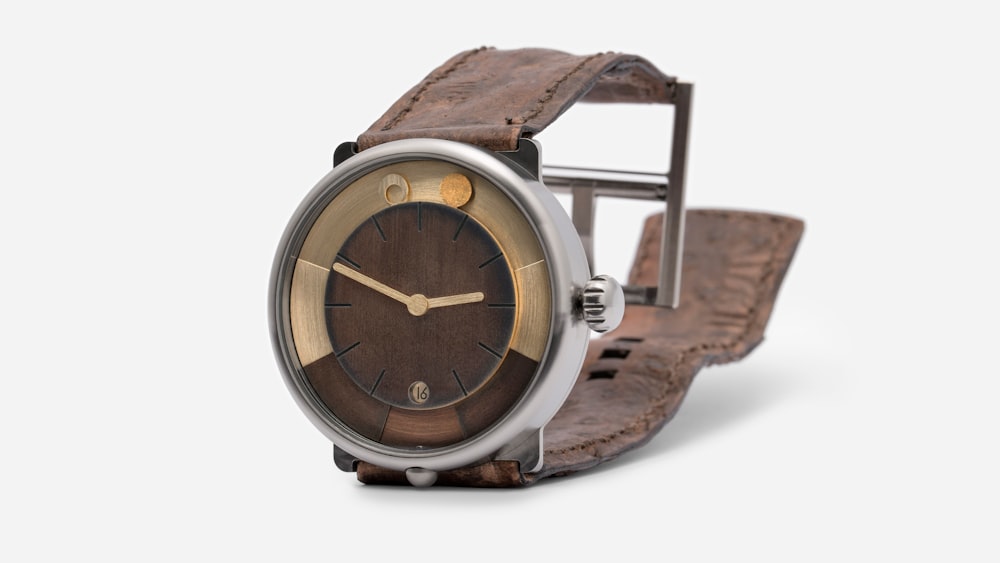
Let’s take a look at the dial of the Day/Night and get a sense of what we’re looking at and how it all works. In the center of the watch, you’ve got a main timekeeping dial with simple stick-shaped hour markers, hour and minute hands, and a date window display at six o’clock. Note that the reason for a digital display here is that it’s meant predominately for setting the other functions (more on that in a second) and those other functions required using a central, digital display, instead of the usual spiral display. Simple enough. All of this works exactly like you think it does.
But what’s all that stuff happening around the outside of the dial? That’s the day/night part of this. The top portion of the dial represents the daytime (the lighter color here), while the bottom half of the dial represents the night time (the darker bit). Since the duration of the day and night change throughout the year, there are two “wings” here, one on either side, that move up and down to adjust how long or short each appears. Rotating over those are a Sun indicator and a Moon indicator. The former shows you where the Sun is in its daily cycle, so you know how much longer before sunrise or sunset; the latter is a sort of moon phase display that works by reading the relative position of the Moon in relation to the Sun – if it’s opposite the Sun, you have a full Moon, and if it’s hidden below the Sun, you have a new moon. The Moon moves slightly slower around the dial than the Sun, hence the change in relative positions. After 29.5 days, the Sun laps the Moon and you’re back to the beginning of a new cycle.
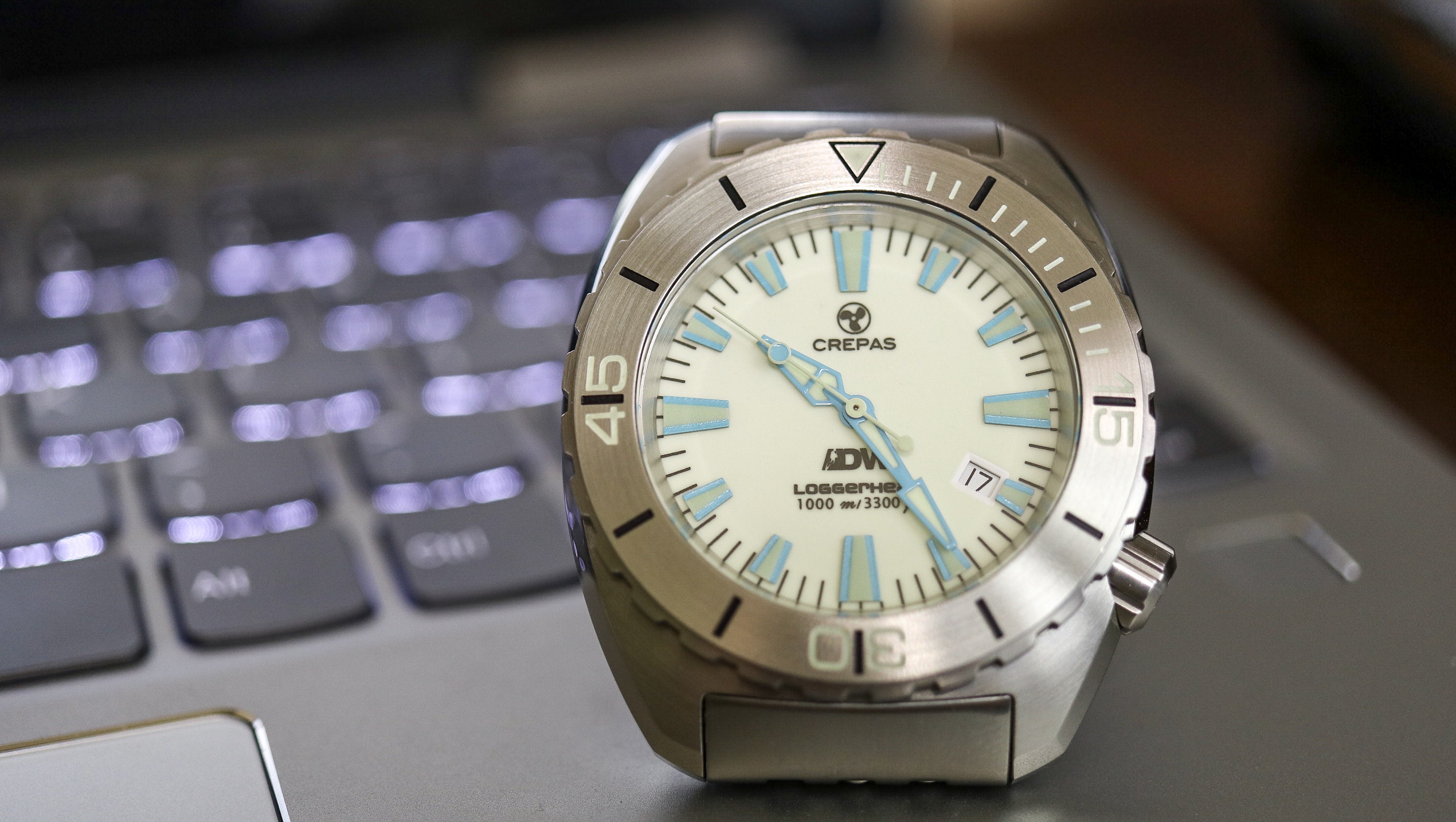
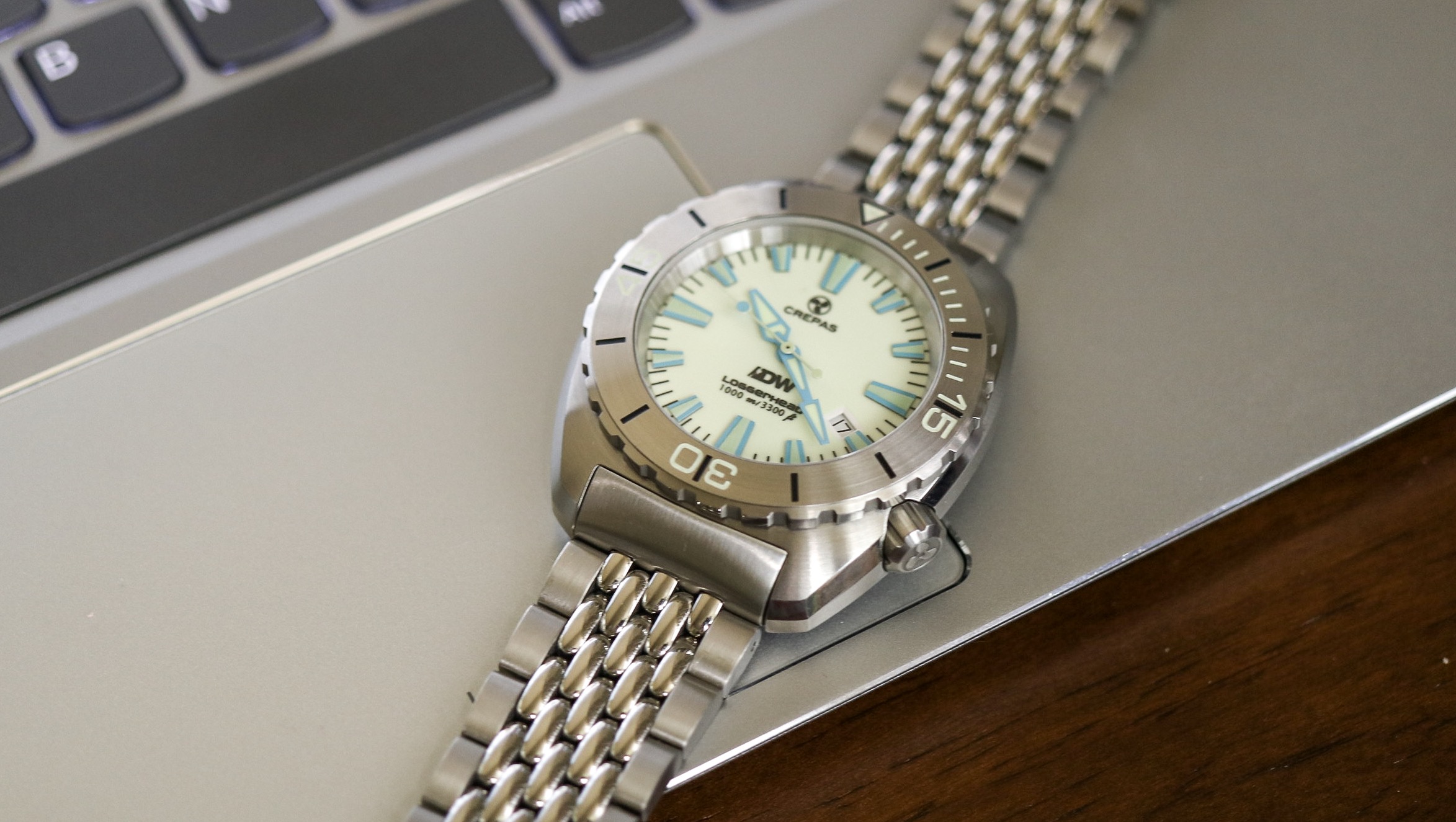
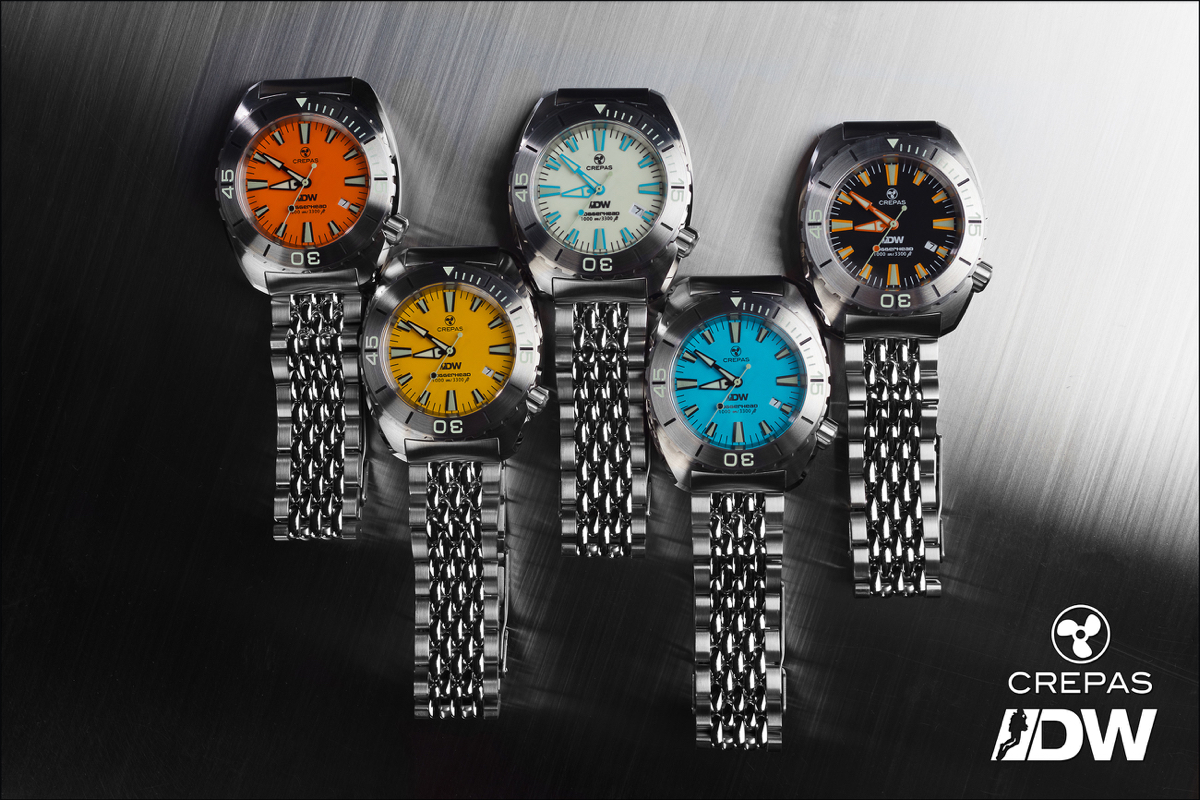
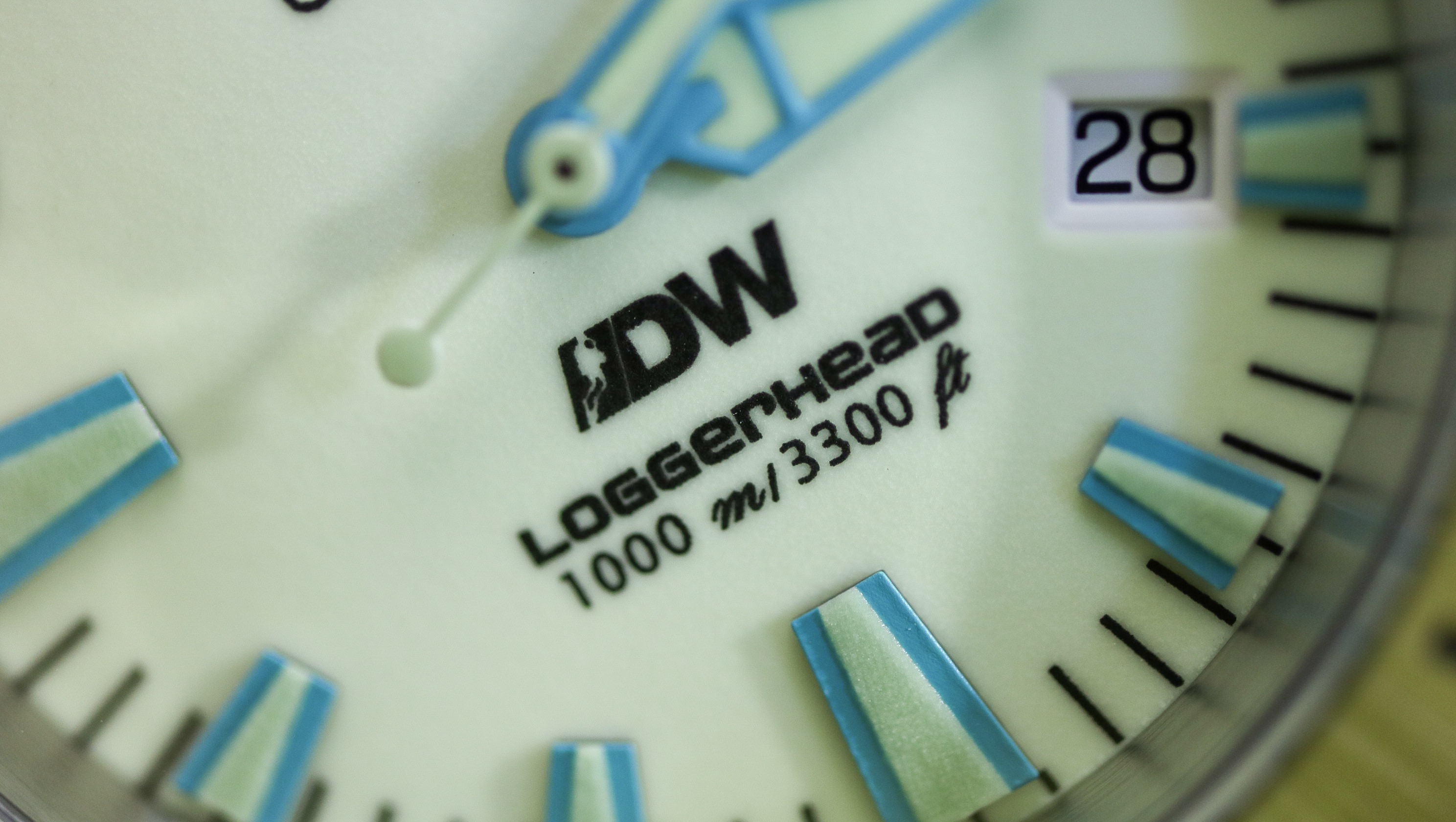
If you are not familiar with Crepas Watches, you have probably not been following microbrands for that long. Crepas hit the scene a few years ago and between Crepas and their sister brand Tactico, they have surely made a name for themselves. Some of their more popular releases have been the El Buzo, the Tektite and the Cayman 3000. That brings me to the one I have in hand today, the Crepas Loggerhead. The Loggerhead is in its last stretch of the preorder as I write this and should be delivered within a few weeks (first or second week of August). The Loggerhead is a collaboration with Divers Watches Facebook Group, a very popular watch facebook group that of course centers around Dive Watches.
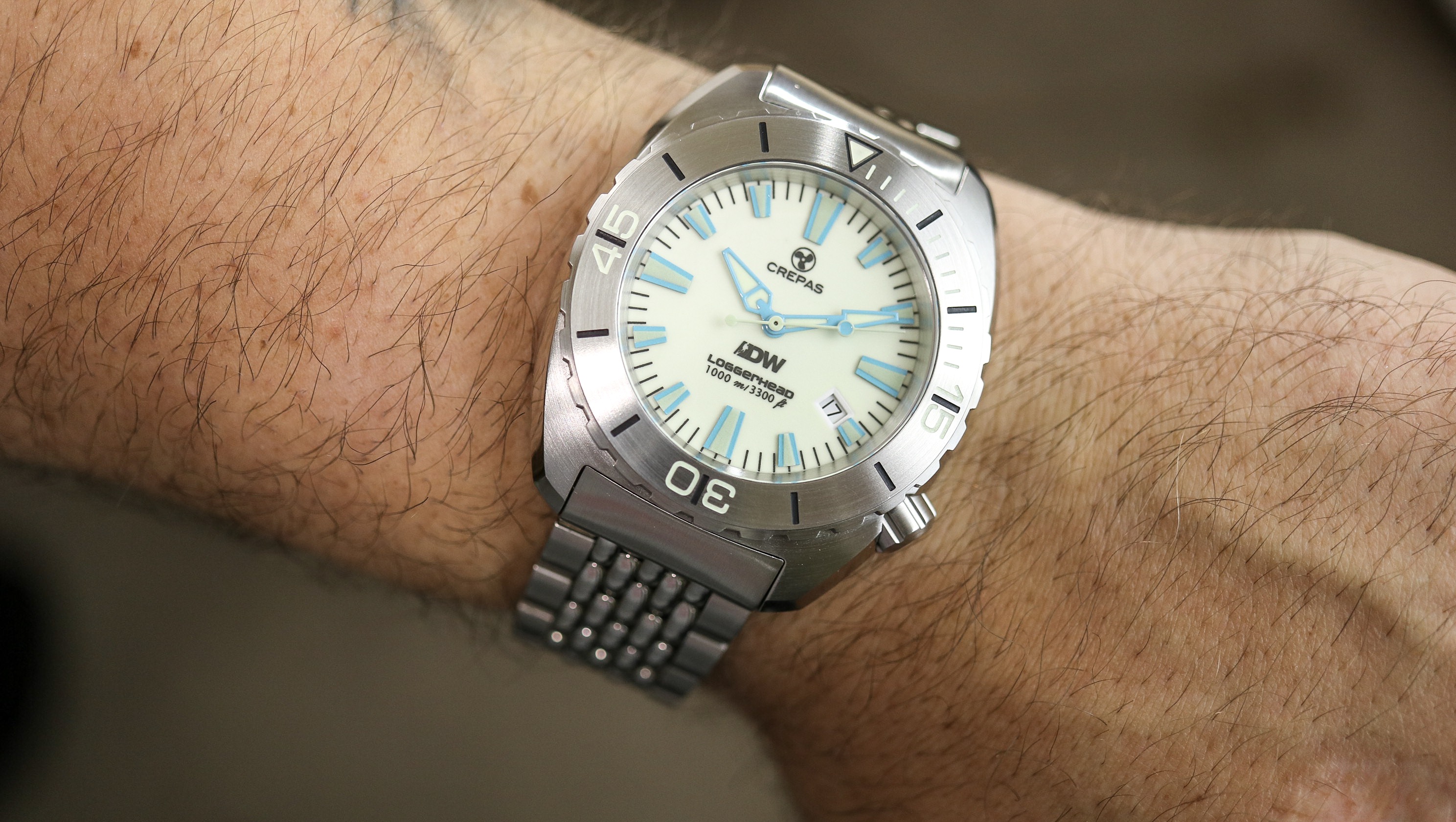
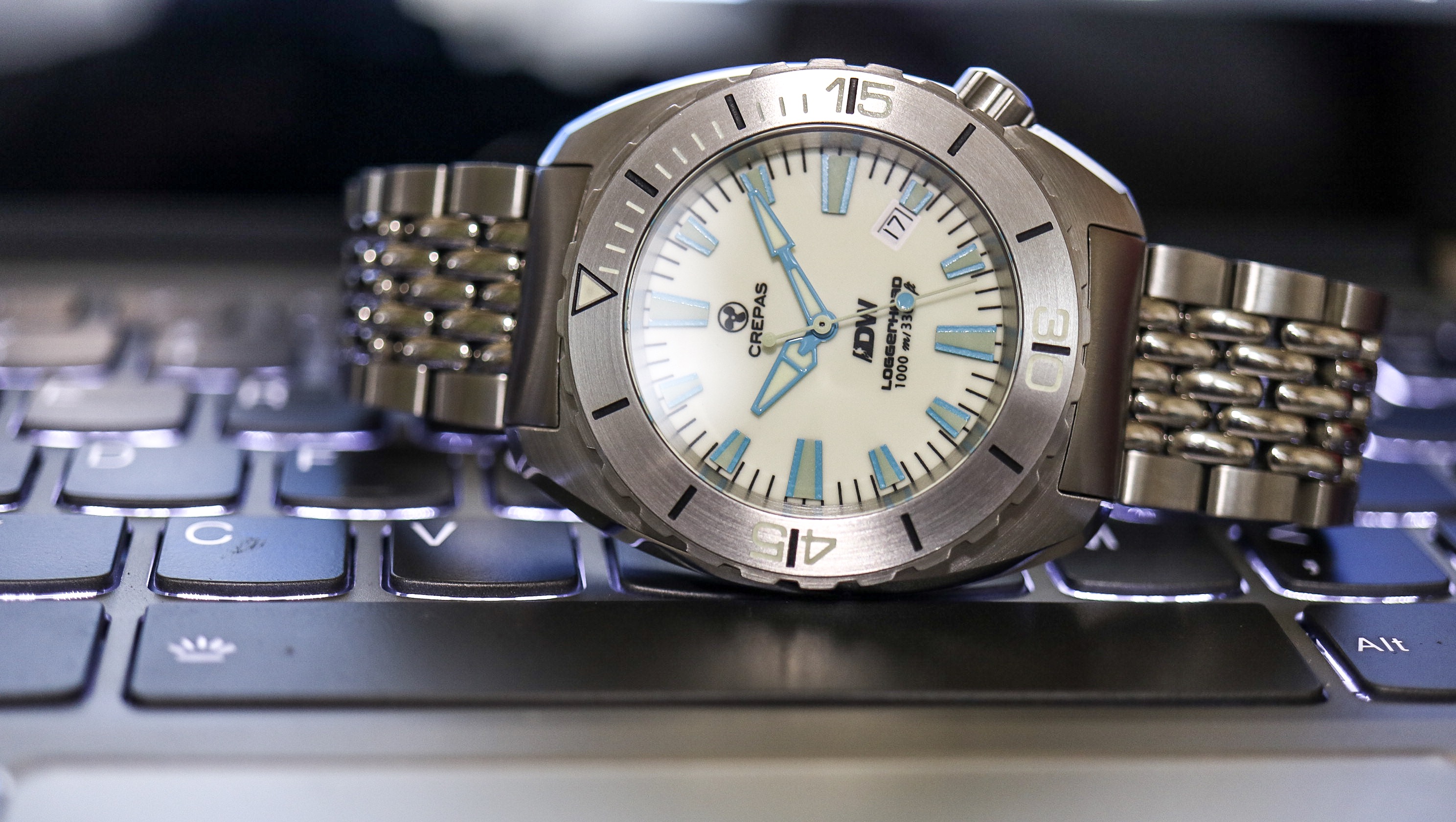
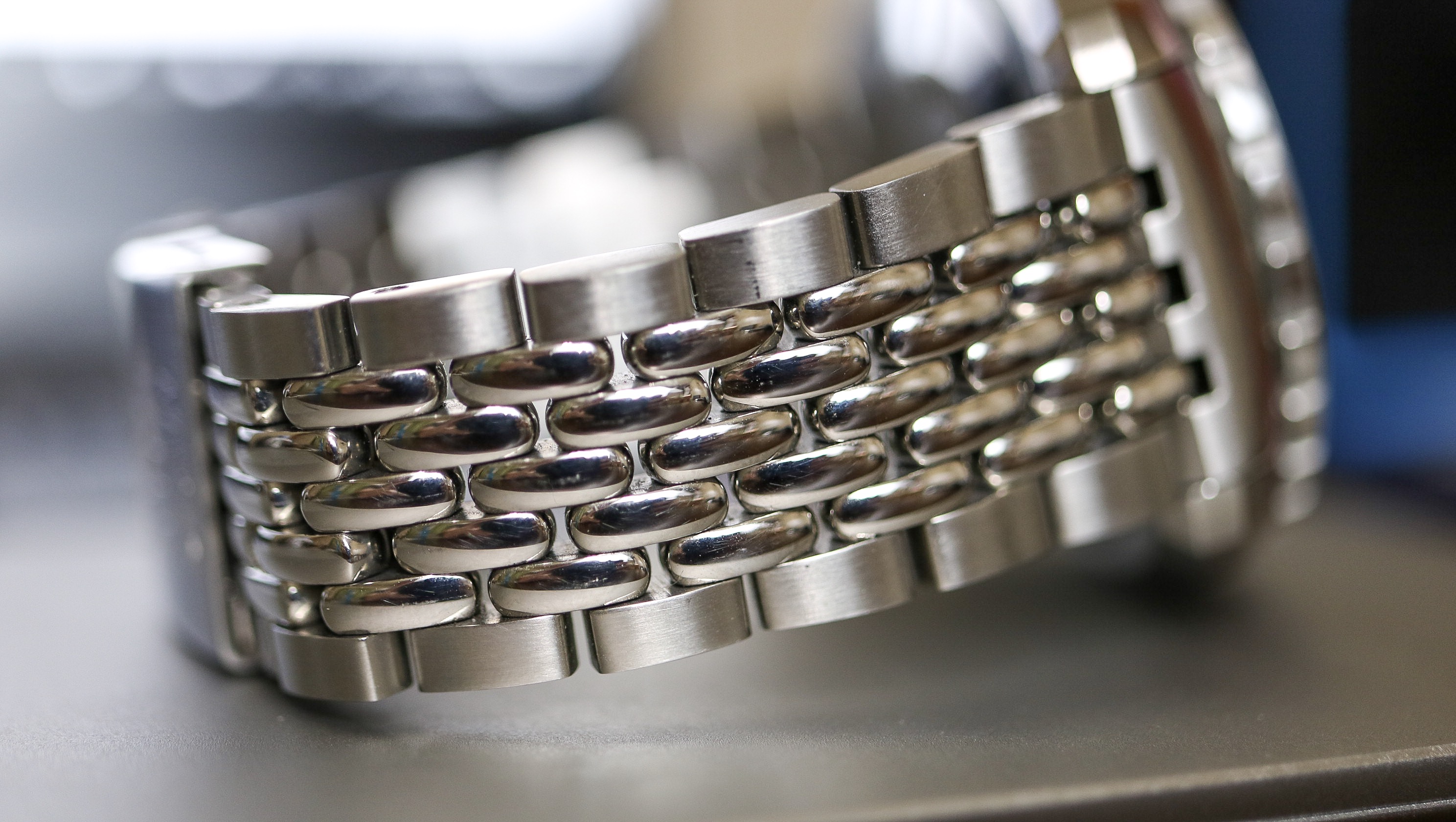
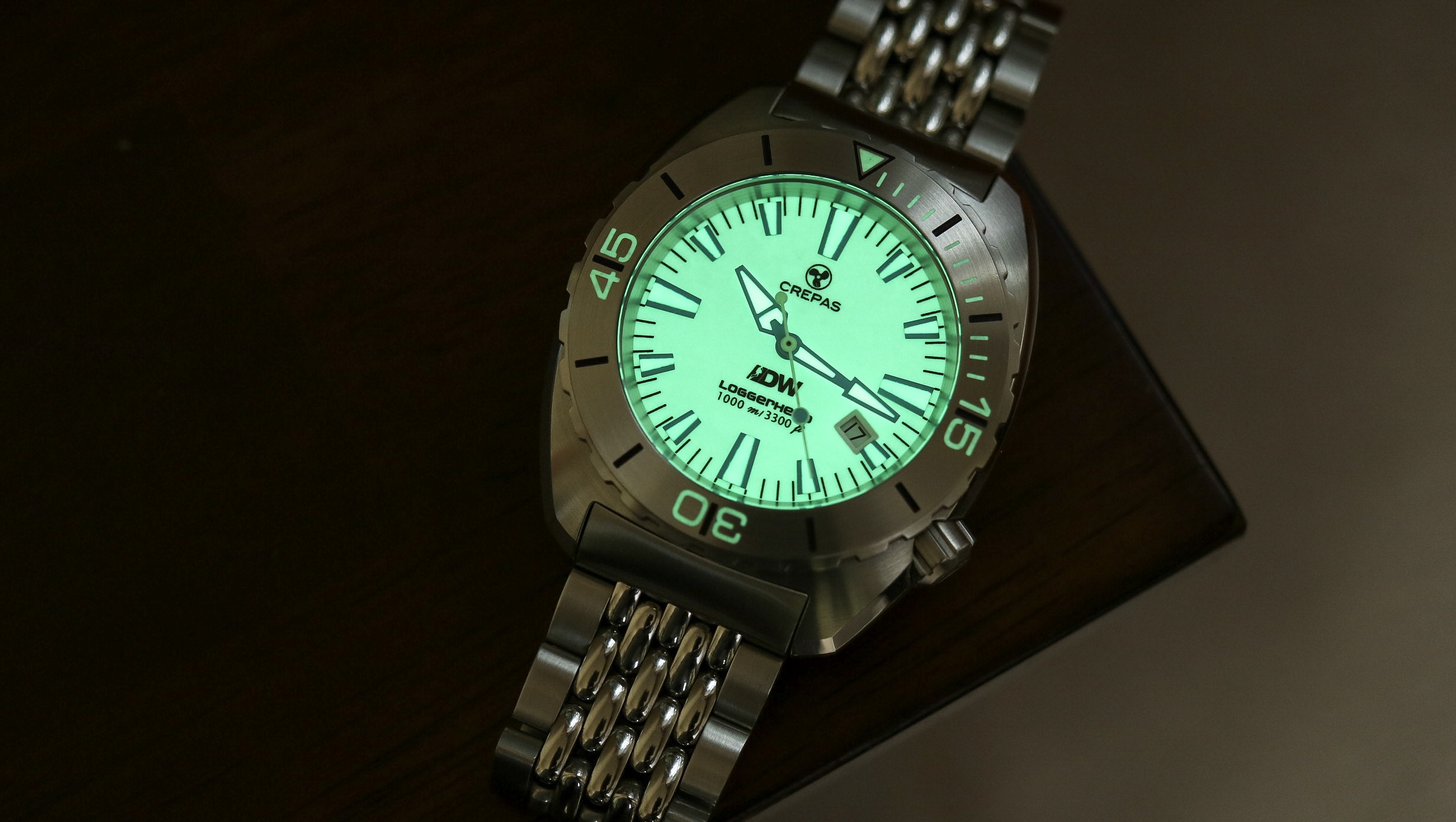
Divers Watches Facebook Group has worked with a few companies over the years and produced some really great dive watches. That said, I feel the Crepas Loggerhead is probably my favorite of the bunch, that is at least until they do a DWFG Edition Doxa. The Loggerhead is a watch that I knew I was going to love from the moment I saw it. It is the vintage 70s style that I adore and has a Beads of Rice bracelet. I knew I needed to get one of these in hand and Ana from Crepas was happy to arrange it. The prototype I have in hand for review is the all lume dial, but my favorite of the bunch has to be the ocean blue version. That one is truly calling my name and has been haunting me in my dreams. Fortunately, these watches will be ready soon, so I will not have to wake up in cold sweats much longer.
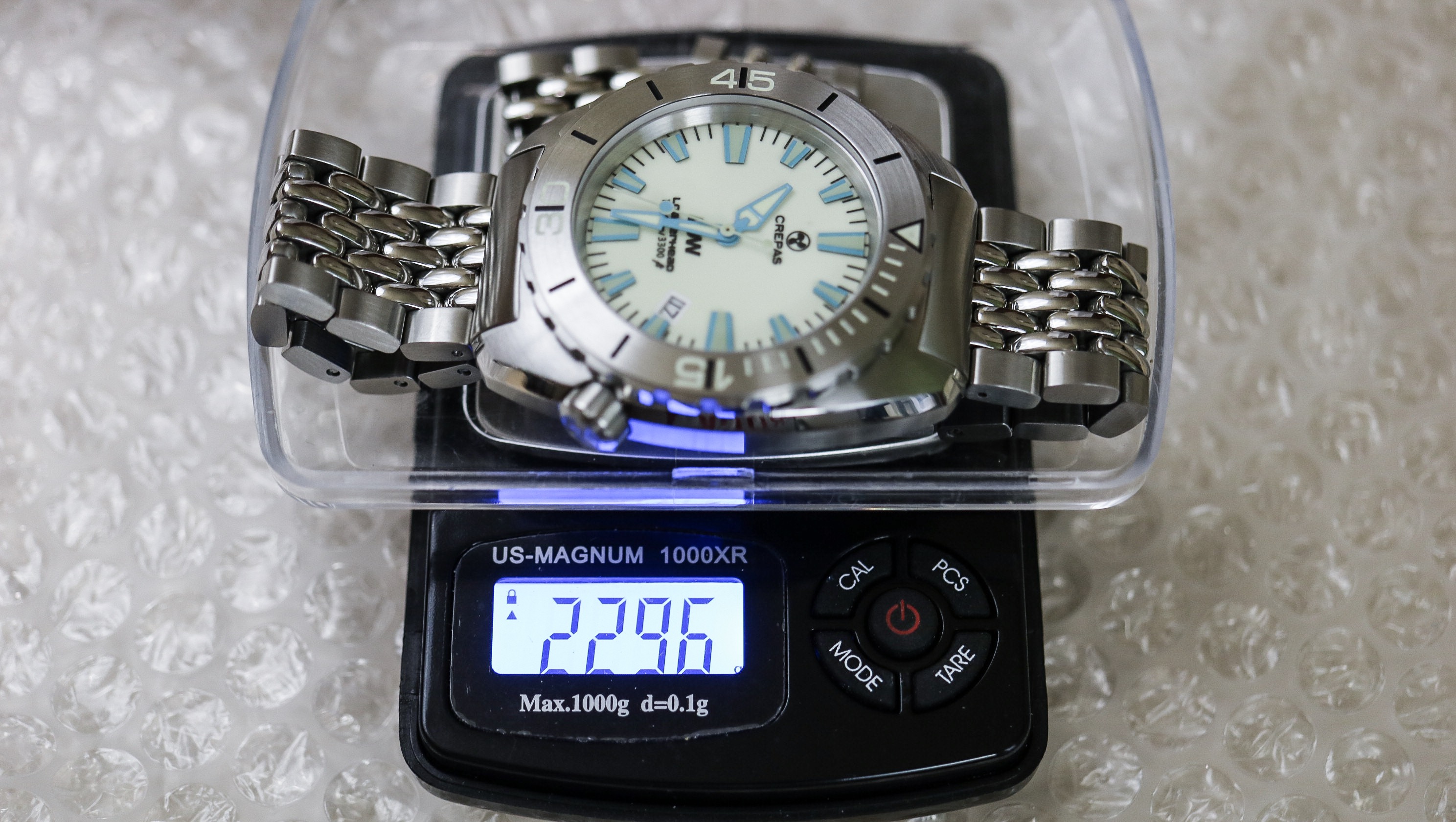
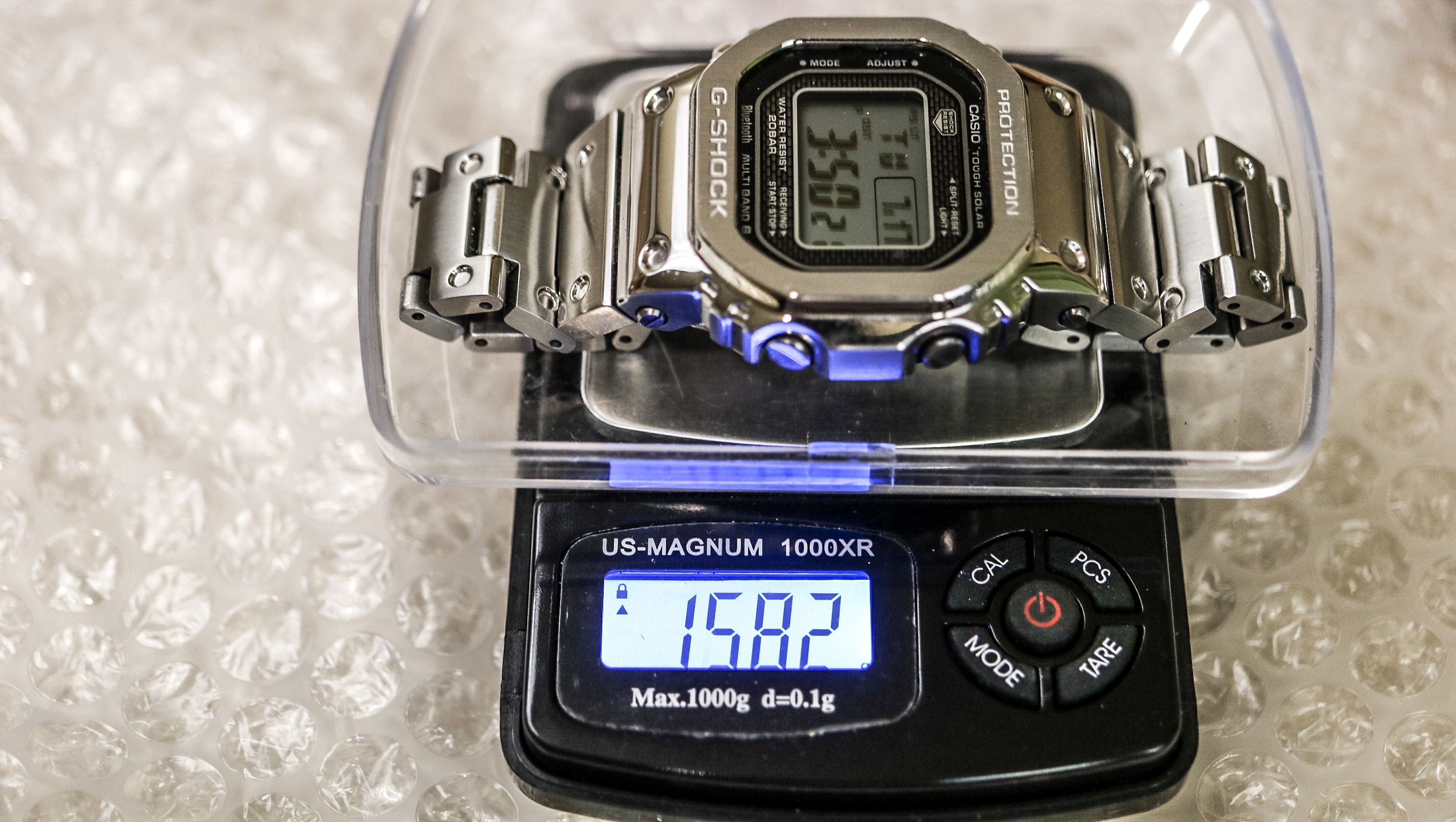
All kidding aside, the Crepas Loggerhead is a great watch and in many ways almost perfect for me. Notice I said almost. Yes, as usual, I have a few things I can pick on and one of them would be the size. I love this watch but I wish it was 42mm. These days, that is a size I love to wear and not only would it be more wearable in the size department, but it would have reduced the weight as well. I have been wearing this Casio All Metal a lot and I don’t realize how much lighter in weight it is until I put on a heavier piece such as the Loggerhead. Most will not find this watch to be very heavy as they are used to watches over 200 grams. I just prefer something a little lighter on a daily basis.
If I am being really picky, I would love to have drilled lugs. It just makes it so much easier for removing the bracelet and strap changes. Granted, I probably will not want to take the BOR bracelet off too much, but it still would have been a nice added feature. I am still unsure on the end link of the bracelet though. I somewhat wish it continued with the BOR links and not the big slab of metal. Maybe it will grow on me. The other minor issue is the spacing of the water resistance measurements on the dial. They just look a little far apart for me and I wonder why that was done. It is not a huge deal, but it is something I immediately noticed. Other than that, the dial is great; applied markers, easy to read hour and minute and hand the date at 3 o’clock.
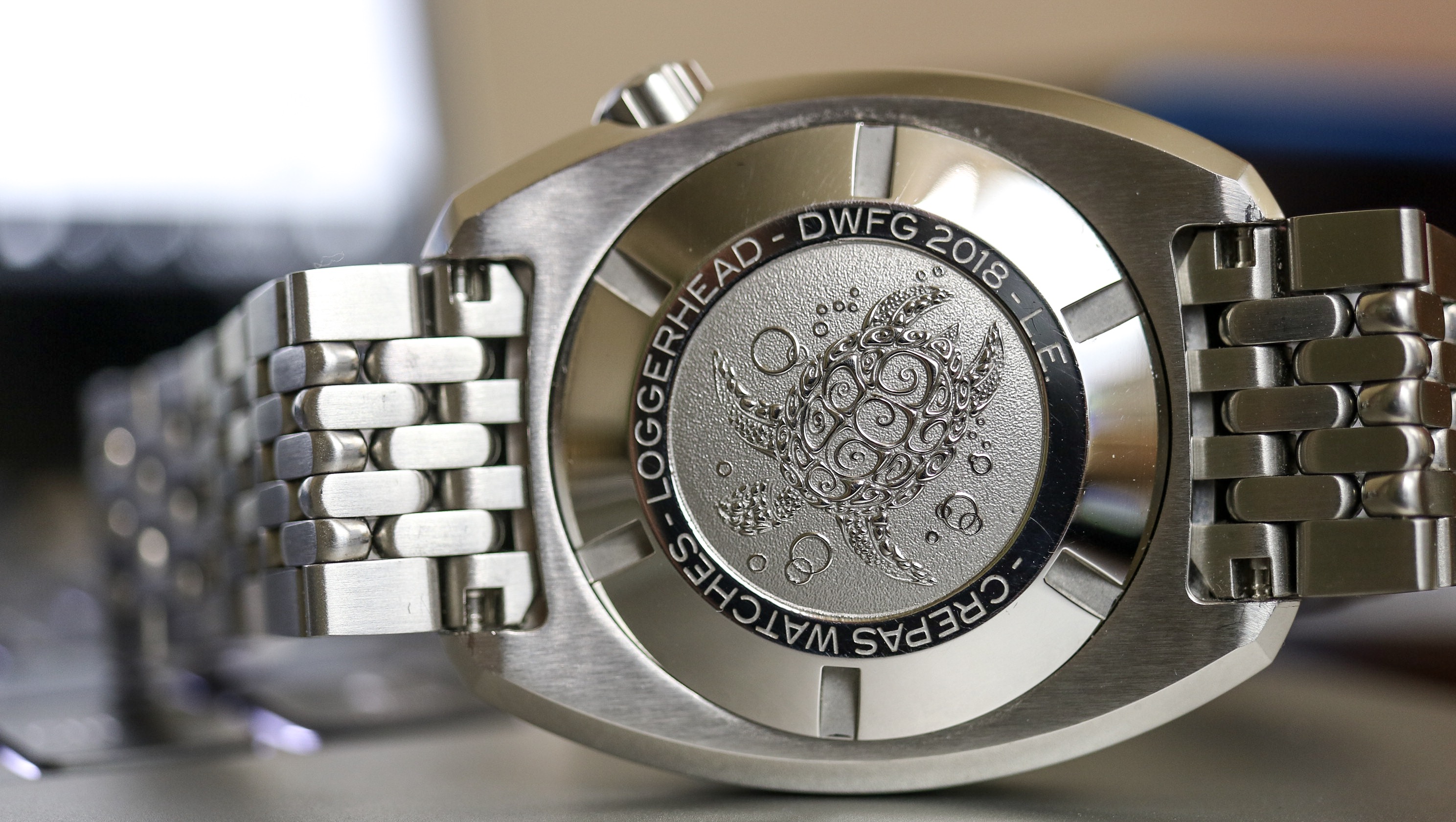
If you have not watched the video yet or somehow glanced over it in the specifications, the movement used for the Crepas Loggerhgead is the tried and true ETA 2824. Now, I have talked at length about movements over the years in many different watch reviews and I think it is widely known that the ETA 2824 is a well regarded Swiss movement. It is the workhorse of the bunch and a movement that set many of standards in its time. It is not the best movement out there by far, but it is nice to see it in the Loggerhead at the price of $619. Going back 7-10 years, it was the norm to see this movement at this price or lower, but many factors have changed that over the years and most microbrands cannot afford the ETA or cannot get their hands on them. Just because Crepas chose the ETA movement, does not mean they need to show it off. Instead, they chose a sea turtle engraving for the case back, and I have to say, I do like it.
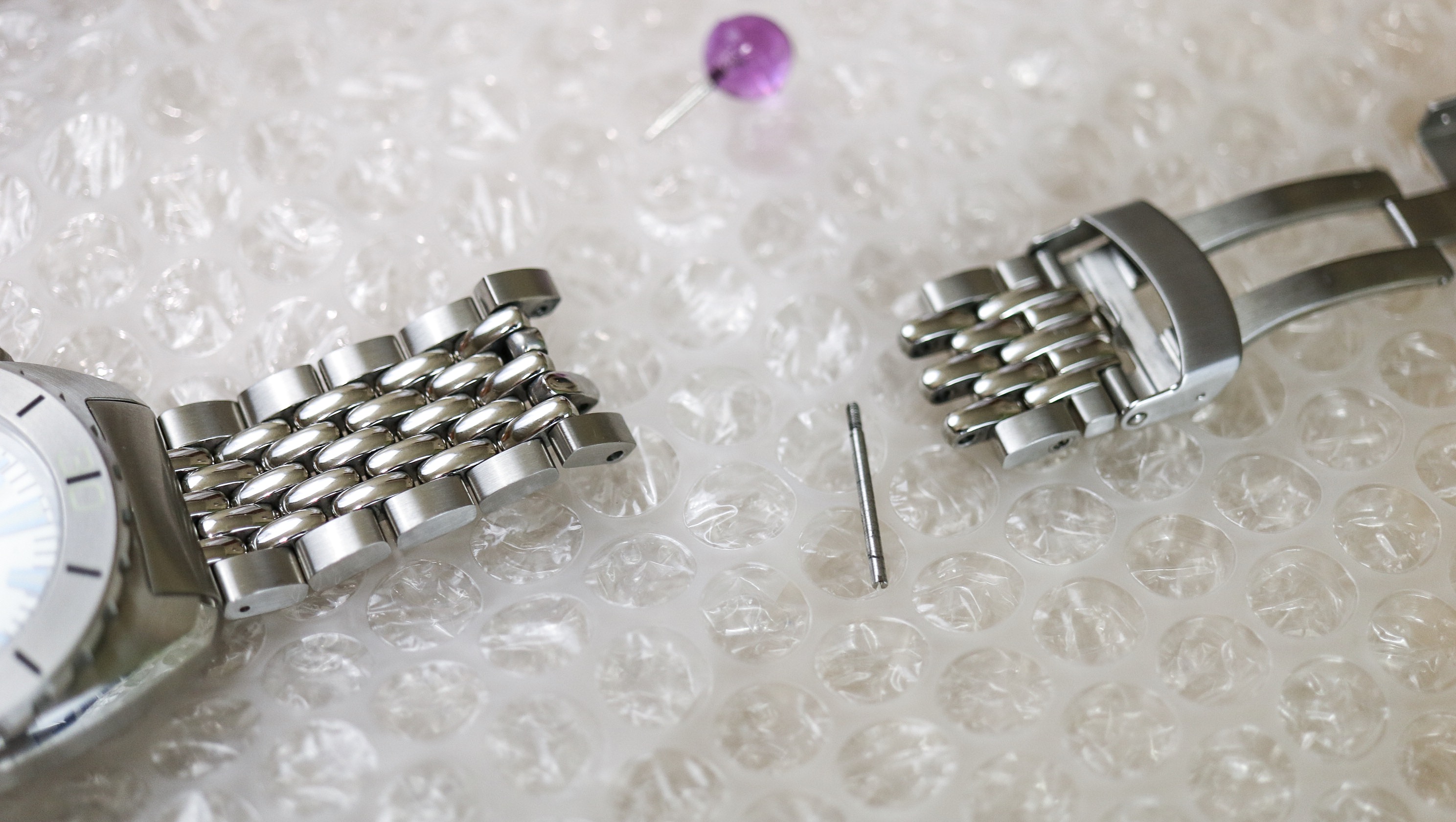
Getting back to one of my favorite aspects of the Loggerhead, and that is the bracelet. If you follow Watchreport on Social Media, you might have seen that about 6 months or so ago I had picked up an Irreantum Magellan. They were another great microbrand that is unfortunately no longer producing watches as the people did not have the time to continue to grow the brand and do it properly. Anyways, that watch is very similar to the Loggerhead in that they are both 44mm, both draw inspiration from 70s styled watches and both came with the BOR bracelet. The biggest difference though is that the Magellan had the rachet dive clasp, where the Loggerhead has the more traditonal flip lock clasp with dive extension. These days, I think I prefer the traditonal clasp as it is not as large and bulky and just wears better on the wrist, especially with a bracelet such as this. One sided screws are used to hold the links together, so sizing is a breeze.
-Crepas Loggerhead Lume-
It is quite obvious that I am pretty enamored with the Crepas Loggerhead. It just ticks a lot of boxes for me. The overall design is right up my alley and the finishing is fantastic, which I expected nothing less from Crepas. This can easily be an $8-900 watch these days but being able to grab one for just over $600 is great. As always, I never try and sell you a watch here. Some watches I love more than others, and that comes across in the reviews, and this one falls in the “love a little more” category. It is not perfect, as I do point out a few things I would have done different, but it is a great looking and comfortable watch and I can’t wait to get the blue dial on my wrist. Don’t forget to check out the Crepas Website and if you are on Facebook, go ahead and join the Divers Watches Facebook Group. If you like dive watches, you will definitely enjoy the group.
Last weekend we flew off to the capital of the United Kingdom to meet up with a small group of watch enthusiasts. We received an invite for this GTG, organised by Chrono24, in the center of London. Following up the first Chrono24 GTG in their headquarter in Karlsruhe, Germany. As you can expect from these kind of events, the location was kept a secret until the very last minute. Directions however led us to a historic location situated on the river Thames. It doesn’t get much more central London than this.
Upon our arrival at Shakespeare’s Globe we make our way up to the event location where we are welcomed by the hosts of the evening. Accompanied by a glass of bubbles we slowly see most of the guests arriving which allows for the start of the official program for the Chrono24 GTG in London.
Holger Felgner, co-CEO of Chrono24
After a word of welcome by our own Blaise and Holger Felgner, one of the Chrono 24 CEO’s, the evening kicks off. Something that has to be said, although Chrono24 is the host of the event, they want to make sure that it’s not about them this evening. Of course we do get some info and insights about them before it’s all about watch collectors and enthusiasts. Saying that they only want to be involved in bringing us together. Something that worked out perfectly this evening.
Not knowing what to expect we quickly learn that we have a special guest. Roger Smith will be the key speaker for the evening. With an impressive background in watchmaking he managed to capture 30 years of his work into a 30 minute presentation. Something he talks openly about with great pleasure.
Roger W Smith OBE. The Watchmaker.
Upon the hint of this presentation on their Instagram account a lot of attention was gained already. Just to give an impression, people asked for additional info and suggested to buy the notes alone. During the 30 minute presentation Roger definitely gave us some food for thought and not for the faint of heart. We quickly dive into the essentials of watchmaking and precision which goes into great detail.
After his presentation it was time to hang out and enjoy the good company. As usual there were several familiar people as well as some new faces. Amongst the attendees there were well known collectors, media colleagues and even someone who was totally new to watches. All together it was an interesting group of people who brought anything from an old school Casio F-91W all the way to a Patek Philippe 3970, perpetual calendar with moon-phase.
Sweet treats
So it clearly doesn’t matter what’s in your watch collection as it was a another great get-together. One of the guests brought his vast collection of highly skilled watch drawings. All made by hand using only 1 rule only, they have to be done in 60 minutes. Make sure to check out his artwork on @onehourwatch and give him a follow if you like what you see.
Lee Yuen-Rapati showing his artwork
The evening lasted until midnight when the last guests left and we found our way back to the hotel before returning home the next day. Just like the first GTG we had a blast and we’re looking forward to the next edition being held who knows where. Big thanks to Chrono24 for the organising and making it another event to remember.